


 + 39

Tuscan Extra Virgin Olive Oil: From Harvest to Bottle
Autumn in Tuscany is an extraordinary and often underrated season: the rolling hills are painted in warm autumn colors, the air carries the scent of fresh earth, and the olive groves prepare for one of the most important moments of the entire year.
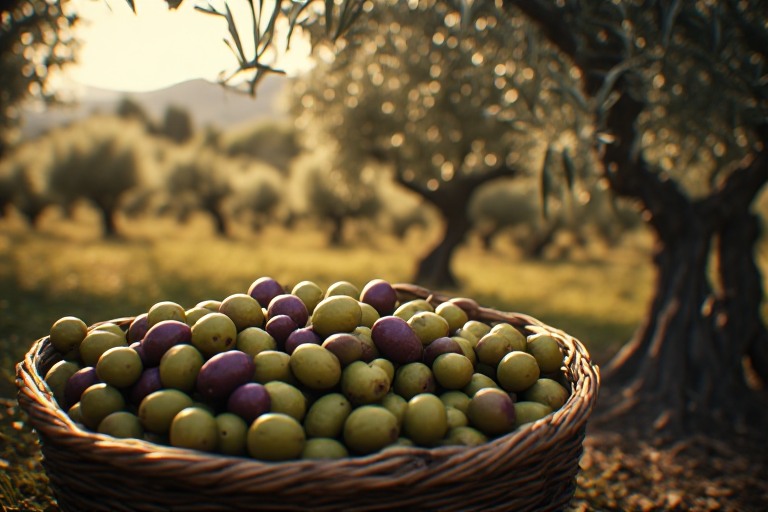
Between October and November, the olive harvest begins—a centuries-old tradition just as much as a dedicated craft. The ultimate quality of the oil is determined long before it reaches the bottle: it starts with year-round care for the trees, continues with choosing the perfect picking moment, and comes to fruition at the oil mill.
The Olive Harvest: A Crucial Step for Quality
The timing of the harvest is a fundamental phase in achieving a rich organoleptic profile in extra virgin olive oil. There is no single ideal date for every grove: olive ripening depends on the specific cultivar varieties and seasonal weather conditions.
- Early harvest: yields oils with a more intense, green, and herbaceous flavor profile, often featuring distinct bitter and peppery notes.
- Late harvest: results in a smoother, milder, and rounder palate.
Harvesting can be done manually, with the help of hand-held rakes and harvesters, or through mechanical equipment. In any case, it is essential to prevent damage to both the fruit and the tree.
Once picked, the olives must be placed in ventilated crates and transported to the mill as quickly as possible. Leaving them piled up for too long risks triggering unwanted fermentation, which permanently compromises the quality of the oil.
From the Mill to the Bottle: The Production Process
Upon arrival at the mill, the olives are defoliated, washed with fresh water to remove any impurities, and then crushed to create a smooth olive paste.
Malaxation and Cold Extraction
The olive paste is slowly mixed during a phase called malaxation (gramolazione). This slow churning allows microscopic oil droplets to merge together, facilitating their subsequent separation.
Next, using mechanical centrifuges, the oil is separated from the vegetation water and solid olive residue (pumice).
Temperature during this stage is critical: the label “cold extracted” (or cold pressed) can only be used when processing takes place at temperatures consistently below 27°C (80.6°F). This meticulous temperature control preserves delicate aromas, polyphenols, and limits oxidation.
Storing Extra Virgin Olive Oil
To preserve the pristine characteristics of extra virgin olive oil over time, proper storage is essential:
- Keep away from direct sunlight;
- Store away from heat sources;
- Use tightly sealed containers (preferably stainless steel or dark glass), minimizing contact with air.
How to Recognize High-Quality Extra Virgin Olive Oil
Contrary to popular belief, color alone is not an indicator of oil quality: a vivid green oil is not necessarily superior to a golden one. Flavor, aroma, and organoleptic evaluation are the true measures of excellence.
Upon tasting, a great Tuscan extra virgin olive oil should evoke distinct notes of:
- Freshly cut grass
- Artichoke and tomato leaf
- Aromatic herbs and fresh almond
A balanced bitterness and a slight peppery sensation in the throat are positive indicators: they signal a high concentration of healthy phenolic compounds (natural antioxidants).
In short, extra virgin olive oil quality depends on 5 key factors:
- The health of the olive trees throughout the year;
- The weather conditions of the season;
- The exact timing chosen for harvesting;
- The speed of milling after harvesting;
- Proper storage conditions post-production.
Furthermore, to be officially classified as Extra Virgin, the oil must meet strict chemical parameters (such as acidity levels below 0.8%) and pass an official sensory panel assessment.
How to Taste Olive Oil the Tuscan Way
The simplest and most authentic way to taste newly pressed olive oil and appreciate its nuances is the classic Tuscan fettunta: a slice of unsalted Tuscan bread, lightly toasted, drizzled generously with raw extra virgin olive oil.
A few simple ingredients allow you to savor the rich aromas and flavors without overpowering them.
Olive Oil at Agriturismo Due Comuni
In Tuscany, olive trees have been an integral part of the landscape and agricultural heritage for generations. In our olive grove, we cultivate traditional native varieties:
- Frantoio, Leccino, and Moraiolo: the classic Tuscan cultivars that provide structure and balanced aromas;
- Rosciola: a unique variety distinguished by its characteristic pink-hued olives.
Our extra virgin olive oil is crafted from a harmonious blend of these varieties, milled just hours after harvesting to highlight the freshness and authentic flavors of our land.
Experience Autumn in Tuscany at Agriturismo Due Comuni
Staying in Tuscany during autumn is a special opportunity to discover the olive harvest tradition and enjoy the peaceful rhythms of the countryside. Choosing an agriturismo allows you to combine relaxation with authentic food and wine experiences, discovering the craftsmanship behind every bottle of oil.
Looking to experience the real Tuscany? Visit our website at www.duecomuni.com and explore Agriturismo Due Comuni: your ideal starting point to experience the Tuscan countryside amidst nature, tranquility, and authentic local flavors.